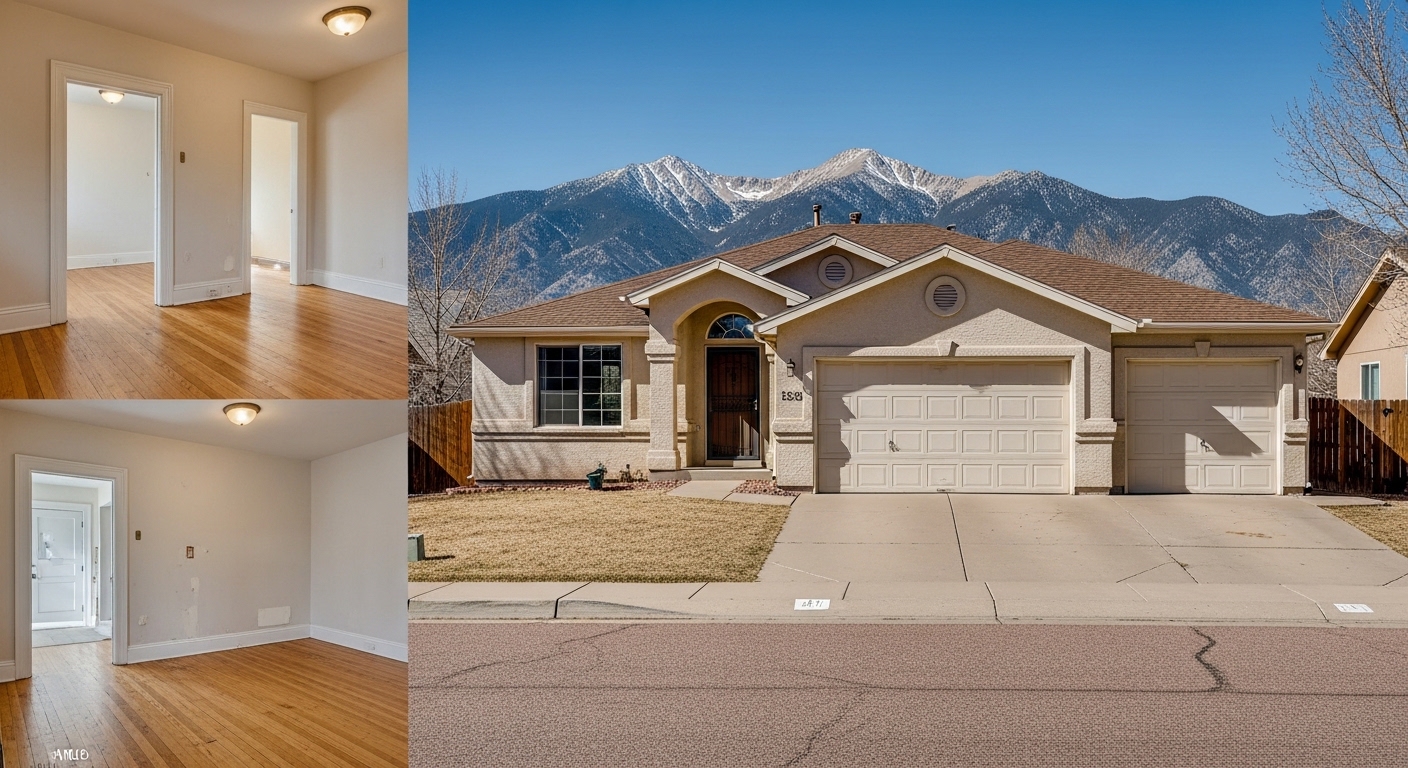
One of the most common questions I hear from people considering buying a home in Colorado Springs is simple: How much do I need to put down? The answer, thankfully, is more flexible than many first-time buyers expect. Let me walk you through what's actually required in 2026 and how you might have more options than you think.
Understanding the Down Payment Basics
Your down payment is essentially your initial investment in the property. It represents a percentage of the home's purchase price that you pay upfront, with the rest covered by your mortgage loan. The amount you'll need depends largely on two key factors: your credit score and your debt-to-income ratio. Your lender will evaluate both to determine what they're willing to offer you.
The minimum down payment required for a conventional mortgage is 3%, but borrowers with lower credit scores or higher debt-to-income ratios may be required to put down more. This is one of the biggest myths I debunk in my practice—you absolutely do not need 20% to buy a home. That 20% threshold exists primarily because it's the point at which you can avoid private mortgage insurance (PMI), not because it's a universal requirement.
Conventional Loans: The Most Common Route
For many Colorado Springs buyers with decent credit scores, conventional loans are the way to go. For a primary residence, the minimum down payment for a conventional loan can be as low as 3% for qualifying first-time or low-to-moderate income buyers, while 5% serves as a common baseline under current conventional loan requirements. This means on a $300,000 home in Colorado Springs, you could put down anywhere from $9,000 to $15,000 to get started.
Now, here's something important to understand about going with less than 20% down: All FHA borrowers must pay mortgage insurance, regardless of down payment, while conventional loans only require private mortgage insurance (PMI) if the down payment is less than 20%. PMI is an additional monthly cost, but it doesn't last forever on conventional loans. Once you build enough equity in your home, you can request to have it removed.
Lenders require a minimum credit score around 620 for conventional loans, and higher scores can unlock better pricing and lower PMI. So if your credit score is in the higher ranges, you might qualify for better rates even with a smaller down payment.
FHA Loans: Flexibility for Tighter Budgets
If you're coming into this home purchase without a substantial savings cushion, FHA loans deserve serious consideration. Many Colorado Springs buyers I work with are surprised by how accessible these loans can be. The minimum down payment required for an FHA loan is 3.5% if you have a credit score of 580 or higher. If you have a credit score from 500 to 579, you'll have to put down at least 10% of the purchase price.
Let me put that in perspective. On a $350,000 home here in Colorado Springs—which is closer to current market prices—a 3.5% down payment would be just $12,250. That's genuinely achievable for many working families. For someone with a credit score between 500-579, they'd need $35,000, which is still considerably less than the traditional 20% ($70,000 in this example).
One unique advantage of FHA loans is flexibility with down payment sources. FHA rules are more flexible regarding monetary gifts from family, employers or charitable organizations you can apply to your down payment. I've had clients whose parents helped with a gift, and that gift letter satisfied the FHA requirements perfectly.
The Real Cost: Don't Forget Mortgage Insurance
Here's where many first-time buyers get tripped up—they focus entirely on the down payment and forget about the insurance costs. Both loan types have important insurance considerations. All FHA loans require mortgage insurance (MIP) — 1.75% upfront plus 0.55% annually. That upfront fee is typically rolled into your loan amount, but the annual premium gets added to your monthly payment.
With conventional loans, if you put down less than 20%, you're looking at PMI. The amount varies based on your credit score, loan amount, and down payment percentage. On a $300,000 loan with 5% down, monthly PMI might be roughly $125–$375 depending on credit and loan features. That's based on the common 0.5% to 1.5% annual PMI range.
The key difference? If you put 10% or more down, monthly MIP can be removed after 11 years. Otherwise, it stays for the life of the loan unless you refinance into another loan type down the line. With conventional PMI, you can request cancellation once you've reached 20% equity.
Your Credit Score Matters More Than You Think
I can't stress this enough in my Colorado Springs consultations: Your credit score is like a financial passport for home buying. If you have a credit score of 580 or higher, you can get FHA's 3.5% down payment. If your score is between 500 and 579, you need to put down 10%. The difference between a 579 and 580 credit score can mean an extra $22,750 down on that $350,000 home.
This is why I often recommend buyers spend a few months improving their credit before applying for a mortgage. A little effort now can translate to significant savings down the road.
Don't Overlook Down Payment Assistance Programs
If you're struggling to save for a down payment, Colorado Springs and El Paso County have resources available. Even better, gift funds from family or approved sources—and down payment assistance (DPA) programs—can help cover the upfront costs. There are nonprofits, local housing authorities, and government programs specifically designed to help qualified buyers overcome this hurdle. When I'm working with clients, I always make sure to point them toward these local resources.
What About Your Debt-to-Income Ratio?
Lenders care deeply about your DTI ratio—it's a measure of how much of your gross monthly income goes toward debt payments. HUD says that your housing payment should usually be less than 31% of your gross monthly income. However, if you have other debts, you can go up to 43% of your total debt-to-income ratio. This is a critical factor that often gets overlooked in down payment conversations, but it can absolutely affect the amount you'll be approved to borrow.
The Smart Approach to Your Down Payment
Here's my advice after years of helping Colorado Springs residents buy homes: Don't fixate on reaching 20% down. Instead, work backward from your goals. Ask yourself:
- What monthly payment can you comfortably afford?
- How quickly do you want to build equity?
- What's your long-term plan for this home?
- How does your current credit score affect your options?
Once you answer these questions, you'll have a clearer picture of whether putting 3%, 5%, 10%, or 15% down makes the most sense for your situation. Sometimes a smaller down payment that keeps your emergency fund intact is the smarter financial move than stretching to meet an arbitrary 20% target.
Ready to Find Your Colorado Springs Home?
The down payment piece is just one part of the home-buying puzzle. Finding the right property in Colorado Springs's diverse neighborhoods—from northwest areas near Manitou Springs to the growing developments in northeast Colorado Springs—requires local expertise. That's where I come in.
I can help you understand how different down payment options affect your overall mortgage picture, connect you with lenders who understand FHA and conventional financing, and guide you toward properties that make sense for your budget. On my HOUSEJET page, you can explore available homes in your price range and get a real sense of what your investment will look like in Colorado Springs.
The truth is, buying a home doesn't require perfect finances or a massive chunk of cash saved up. It requires a solid plan, a trusted guide, and honest information about your options. I'm ready to help you with all three. Give me a call, and let's talk about your down payment strategy and get you into the Colorado Springs home you deserve.